Wellness brands
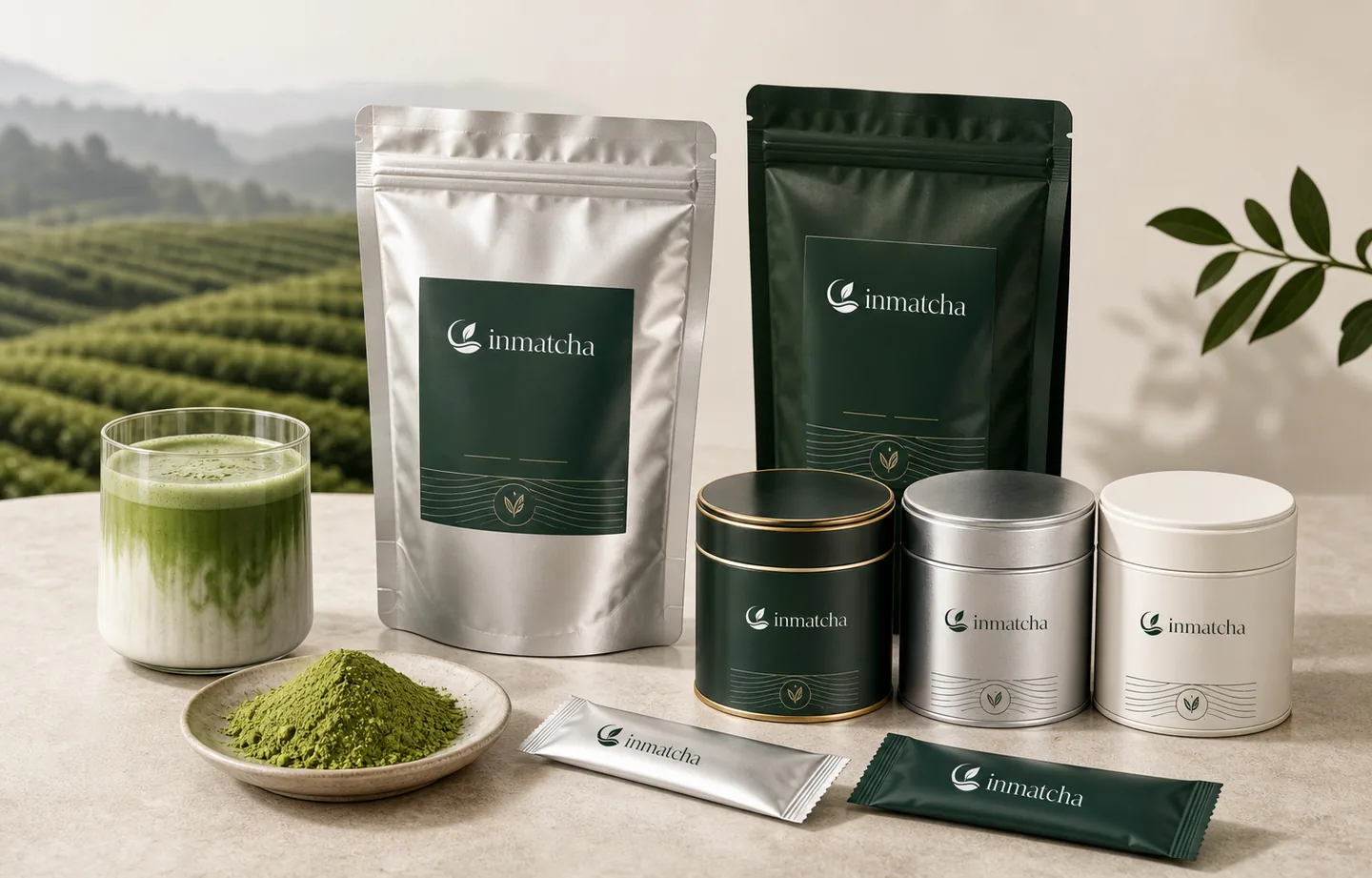
Matcha for wellness brands that sell on ingredient quality.
Functional drink mixes, greens blends, energy alternatives, and wellness SKUs need matcha that survives blending, holds colour on shelf, and can be described accurately on a label.
Short answer
Wellness buyers should test the blend, not the powder.
Matcha rarely ships alone in a wellness SKU. It sits next to collagen, protein, adaptogens, or fruit powders that change colour, taste, and flow. Judge a sample after blending at your real inclusion rate, not as a standalone tea.
What changes in a blend
What wellness formulators check first
These are the failure points we see most often when a matcha that tasted good on its own underperforms in a finished wellness product.
At 2 to 5 percent inclusion, matcha reads as a tint rather than a colour. Below that, expect a pale sage rather than the green on your pack shot.
Wellness blends are often taken in water, not milk. Without dairy to soften it, astringency that was invisible in a latte becomes the dominant note.
Fine matcha compacts. If your filling line or sachet format is sensitive, test flow with the actual blend, not the matcha alone.
Matcha fades with heat, light, and oxygen. Test a retained sample after storage in your real pack, not only at production.
If you make a caffeine claim, it needs a number that matches the batch and inclusion rate, not a general figure copied from a tea reference.
Origin, grade, and health-adjacent wording all need to match what the supplier route can actually evidence for that market.
Grade direction
Which line usually fits a wellness SKU
Most wellness products land in one of two directions depending on whether matcha is the hero ingredient or a supporting one.
Premium retail line
When matcha is named on the front of pack and the product is sold on colour and smoothness, the premium retail direction is usually the right starting point.
Balanced beverage line
When matcha is one of eight ingredients and cost per serving matters, the balanced beverage direction usually gives better margin without a visible drop in the finished blend.
Organic and EU routes
If your market or retailer requires certification, start from the document route and let that narrow the grade, rather than the other way around.
Origin and craft
What we can tell you about the leaf
InMatcha supplies China-grown matcha from high-altitude, shade-cultivated gardens, stone-milled to a fine powder. We describe origin at the level we can evidence for your market, and we confirm specifics per batch rather than making blanket statements across the whole range.
Specification summaries and batch references are tied to the lot you are buying.
Organic, halal, kosher, FSSC 22000, and FDA-registered facility routes may be available depending on the selected product and destination market.
We would rather tell you what needs confirming than publish a claim you cannot defend to a retailer.
Common questions
Wellness sourcing questions
Send your inclusion rate and format with the enquiry and the sample route can be narrowed before anything ships.
What inclusion rate should I sample at?
Send your intended percentage. We will suggest a grade direction for that rate rather than a general recommendation, because a 2 percent blend and a 30 percent blend behave very differently.
Can you support a caffeine figure for my label?
Caffeine content varies by batch. Testing can be discussed for a confirmed lot, but we will not supply a general number for label use.
Do you supply matcha for capsules and tablets?
Yes, that is a different conversation from drink blends because particle size and flow matter more than whisked foam. Tell us the dosage format up front.
What is the minimum order?
Sampling comes first. Minimum order is 12 kg per shipment, in 250 g bags — 48 bags.
Sample request
Send your blend, not just your category.
Inclusion rate, other ingredients, pack format, target market, and any certification requirement.