Culinary matcha powder
Culinary matcha for bakery, dessert, dry mix, and scalable food use.
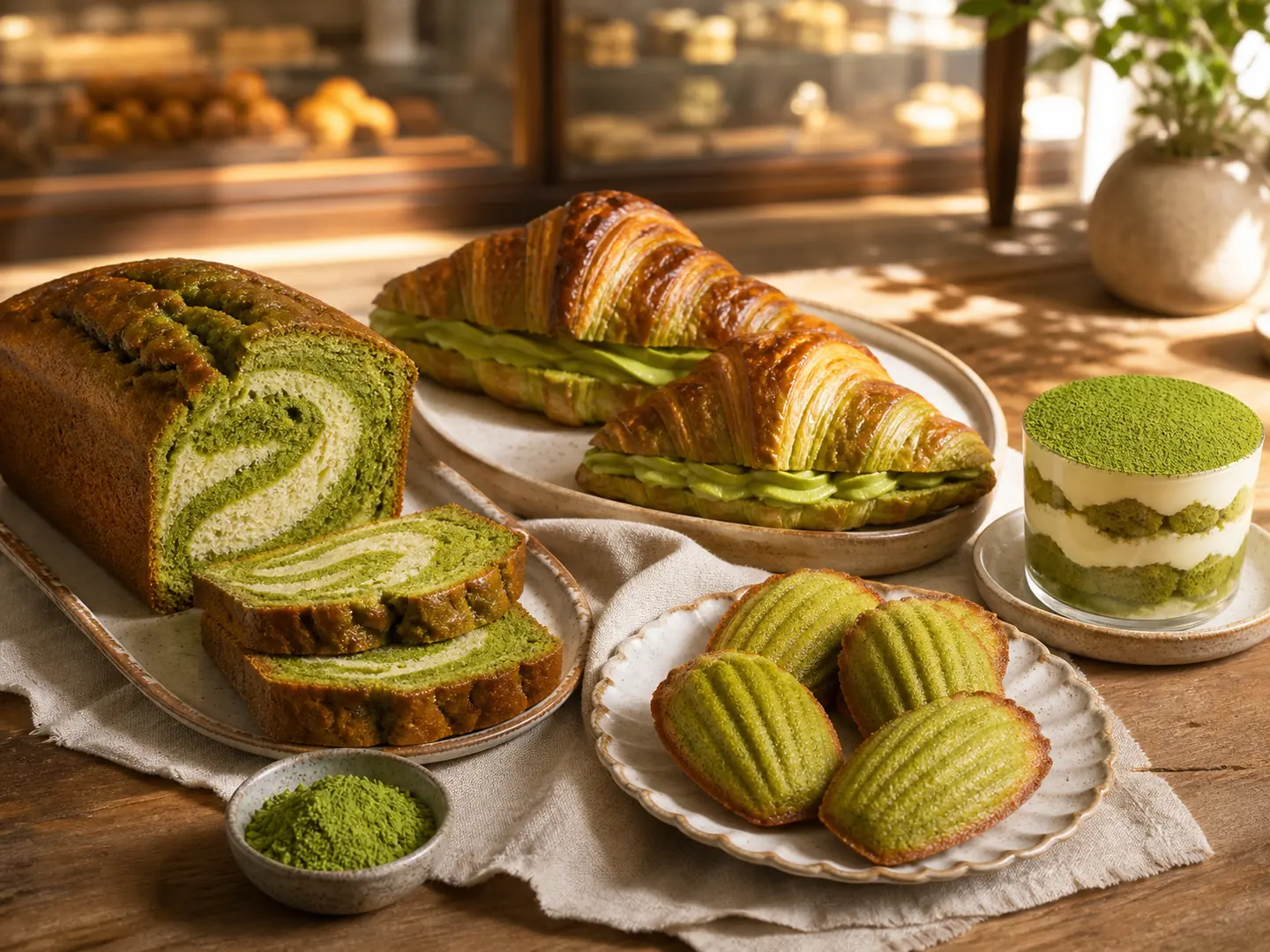
Food manufacturers need matcha that performs after processing, not only in a bowl photo. Color, aroma, flavor strength, dosage, and recipe cost all matter.
Short answer
Culinary matcha should be tested after the real process.
Baking, mixing, freezing, sweetening, and shelf-life conditions can change matcha color and flavor. InMatcha helps buyers compare sample routes in the real product, then discuss pack size and repeat supply.
Parameters
Culinary testing parameters
Culinary matcha should be judged after the real process, not only as dry powder. These test points help production teams compare practical routes.
1%, 2%, 3%
Compare color and flavor strength by recipe weight.
Buyer checkBefore and after bake
Evaluate dulling, bitterness, and aroma retention.
Buyer check24-hour blend review
Watch clumping, streaking, and powder distribution.
Buyer checkBuyer mistakes
Common culinary buyer mistakes
Food manufacturers often request a vivid powder sample, approve it on the desk, and only later discover that heat, sugar, flour, fat, or freezing changes the final color. Culinary matcha should be tested in the finished product at production-like dosage, because the best photo sample may not be the best factory sample.
Judging color before baking instead of after the finished product cools.
Using a premium beverage powder where a stronger culinary route would be more economical.
Ignoring blend behavior in dry mix, where fine powder can streak or clump if the process is not tested.
Buyer detail
Food production approval details
Food production matcha must be chosen by recipe behavior. Buyers should compare 1%, 2%, and 3% inclusion after the real process, then record color, aroma, bitterness, blend behavior, and recipe cost. A powder that looks vivid before baking can turn dull after heat, fat, flour, sugar, or freezing. Bulk planning should start only after the finished product test and document route are both understood. Production teams should also record whether the approved route can repeat across pilot batch, first production run, and reorder batch.
Buyer facts
Key details buyers usually want immediately.
These facts help procurement and R&D teams decide whether to request samples and what information to include.
Samples first, then a 12 kg minimum order — 48 bags of 250 g.
Retail pouch, tin, sachet, carton, and bulk formats from 250 g to 20 kg.
COA, FSSC 22000, FDA-registered facility route, organic, halal, and kosher paths where applicable.
Bakery, dessert, confectionery, ice cream, dry mix, sauces, and snack manufacturers.
Processing color, dosage, aroma retention, bitterness, blend uniformity, and recipe cost.
Bulk and production formats can be discussed after formula testing.
Next route
Food production route
Start with the process that will stress the powder most.
Related sourcing questions
Continue the buying path with related pages.
Use these pages when the current question touches grade choice, sample testing, packaging, documents, or the next commercial decision.
Food manufacturing matcha
For factory and recipe-scale decisions.
Open pageRelatedApplications
For bakery, beverage, and retail use cases.
Open pageRelatedRTD and bakery article
For cross-application testing.
Open pageRelatedWholesale matcha powder
For bulk sourcing overview.
Open pageRelatedSample kit
For comparison testing.
Open pageFAQ
Questions buyers ask before moving to samples.
Short answers help procurement, R&D, and brand teams prepare a clearer sample request.
Can latte grade matcha be used for baking?
Sometimes, but it may not be economical or strong enough after processing. Culinary testing should use the real recipe and dosage target.
Can InMatcha provide documents before bulk ordering?
Document availability depends on the selected grade, supplier route, certification scope, destination market, and confirmed batch. Buyers should share document needs before sampling.
Can I request multiple matcha grades for comparison?
Yes. A sample route can compare latte, beverage, culinary, retail, or documentation-led options against the real product application.
What percentage of matcha should be tested in bakery products?
A practical first screen is 1%, 2%, and 3% by recipe weight. The final dosage depends on color target, flavor strength, bitterness, and recipe economics.
Why does matcha turn dull after baking?
Heat, pH, fat, sugar, flour, and bake time can all affect color. Culinary matcha should be tested after the real process before bulk buying.
Sample request
Request culinary matcha samples.
Tell us your product type, process, dosage target, market, and expected production volume.