Retail and gift
Matcha for retail shelves and gift programmes.
Speciality food shops, gift retailers, museum and hotel stores, and online sellers buy matcha the way they buy any shelf product: by presentation, price point, reorder rhythm, and how well it survives a slow-moving season.
Short answer
On a retail shelf, the pack does most of the selling.
A shopper cannot taste matcha before buying it. They judge the tin, the colour visible through a window, the story on the back, and the price against the tin next to it. Sourcing for retail therefore starts with the format and the shelf price, then works back to the grade.
Retail-specific
What shelf products need that foodservice does not
Cafes buy 1 kg bags and use them in a fortnight. Retail buys 30 g tins that may sit for months. That single difference drives most of the sourcing decisions below.
Retail matcha is judged dry, not whisked. Colour and fineness in the tin matter more than foam performance.
Plan for months on shelf, not weeks. Pack format and barrier matter as much as the powder itself.
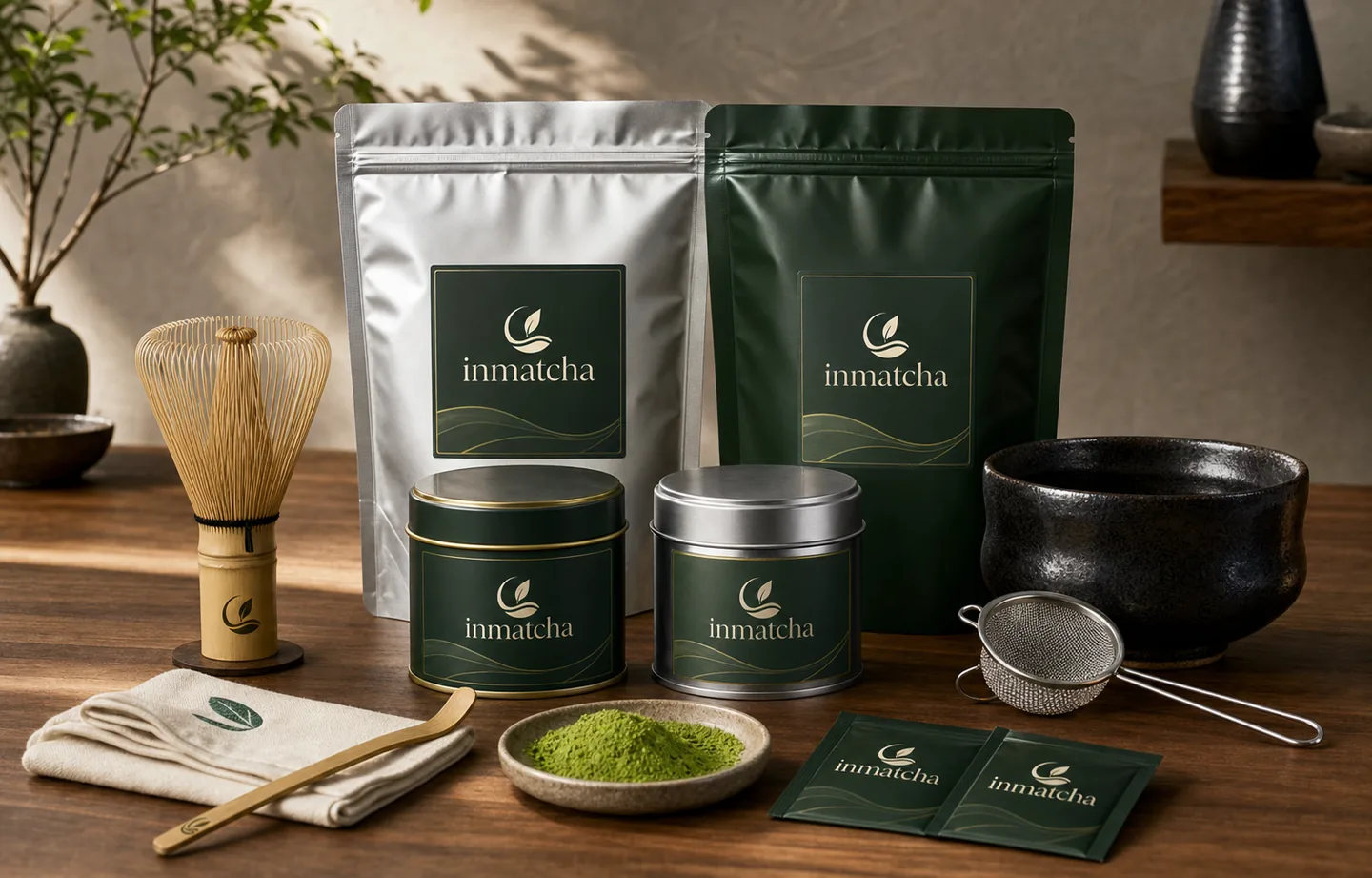
Retail formats are typically 30 g to 100 g tins and 100 g to 250 g pouches, filled from bulk.
Your shelf price sets the grade, not the other way round. Tell us the target retail price and margin.
Gift programmes spike. Lead time and reorder planning matter more than for steady foodservice supply.
A powder plus whisk, bowl, and scoop set carries a higher ticket than powder alone and is easier to gift.
Formats
Three ways retailers usually start
Most retail programmes begin in one of these three shapes, and each has a different first order profile.
Stocked pouches and tins
Buy finished packs under our presentation. Fastest to shelf, lowest commitment, least differentiation.
See product linesPrivate label tins
Your brand on the pack, our powder inside. Requires artwork, a decision on tin or pouch, and a first run quantity.
Private label routeRitual and starter sets
Powder with chasen whisk, chawan bowl, chashaku scoop, and sifter. Sells as a gift rather than a grocery item.
Matcha setsPositioning
What you can honestly put on the back of the pack
InMatcha supplies China-grown matcha from high-altitude, shade-cultivated gardens, stone-milled to a fine powder. That is a real story and it is the one we can support. We will not help you imply a different origin, and we would rather your back-of-pack copy survives a customer question than reads well and does not.
China-grown, high-altitude, shade-cultivated. Stated plainly rather than dressed up.
Stone milling and powder fineness are genuine points of difference worth explaining on pack.
Organic and other routes depend on the selected product and destination market, and are confirmed per batch before you print anything.
Common questions
Retail sourcing questions
Tell us your shelf price and format in the first message and the sample route gets much shorter.
What is the minimum for a private label tin run?
It depends on the tin, the label, and the fill size. Minimum order is 12 kg of powder per shipment; packaging minimums are quoted separately once the format is chosen.
How long does matcha stay green on shelf?
That depends on your pack barrier, fill, and storage conditions rather than on the powder alone. Run a retained sample in your real pack before committing to a long-dated SKU.
Can I start with sets before committing to private label?
Yes. Sets are a common first step because they test the price point and the gifting angle without artwork and tooling decisions.
Do you supply the accessories too?
Yes, chasen whisks, chawan bowls, chashaku scoops, sifters, tins, and pouches can be quoted alongside the powder.
Sample request
Start from the shelf price.
Target retail price, pack format, expected units per year, and whether you want your brand on it.