Grade comparison
Matcha Grade Comparison for B2B Buyers
Compare matcha grade directions by application, buyer type, sample testing needs, packaging direction, and documentation boundaries.
The right matcha grade depends on the final application. Cafe and latte programs usually need balanced color, milk performance, and cost per serving. Food production may prioritize recipe behavior and processing cost. Private label buyers need to match grade, packaging, retail positioning, and documentation before ordering.
Grade table
Commercial matcha grade comparison
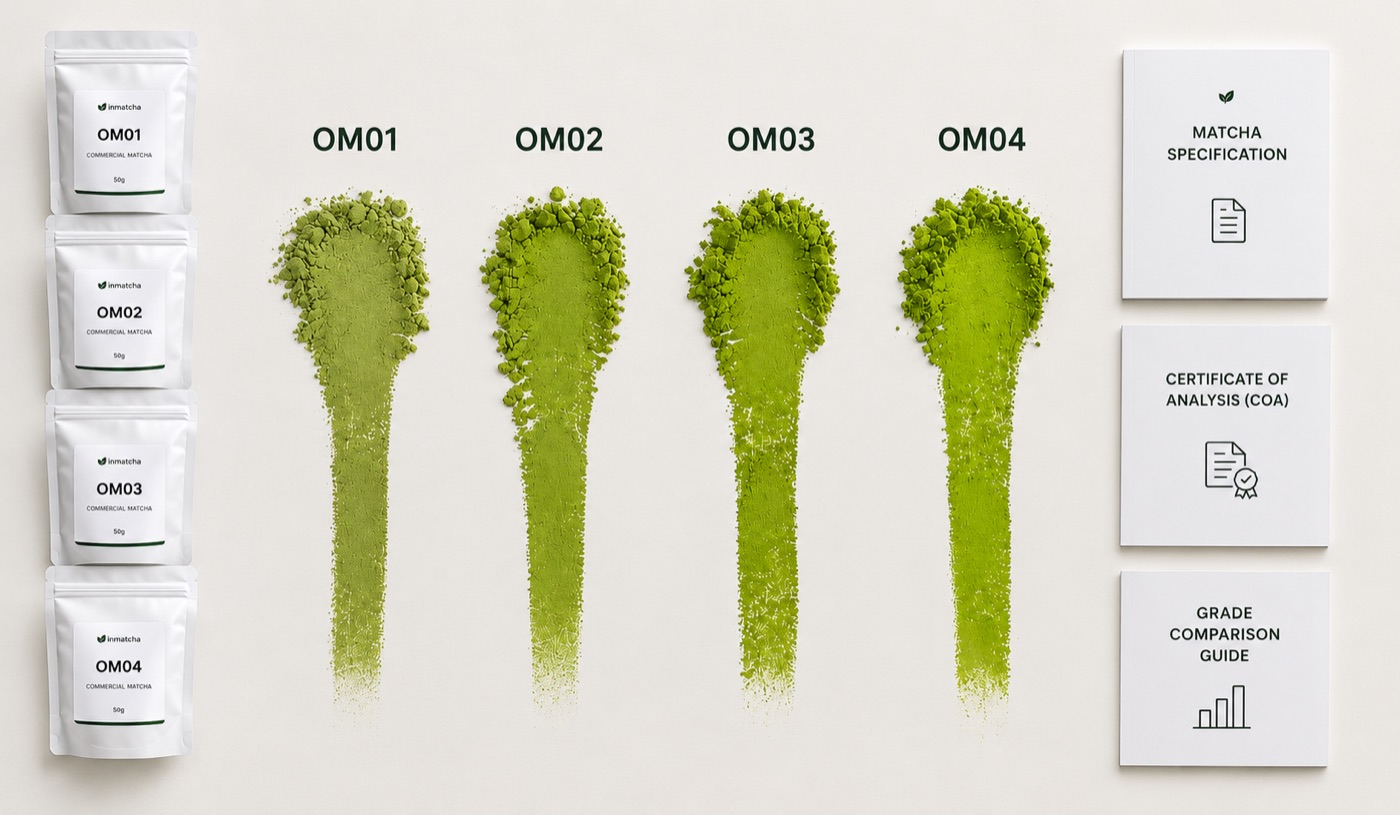
| Grade line | Best-fit buyers | Typical applications | Buyer decision focus |
|---|---|---|---|
| Entry Bulk Matcha | Price-sensitive bulk buyers and entry beverage programs | Blended drinks, basic foodservice, bulk ingredient use | Cost target, acceptable color, practical taste profile |
| Balanced Beverage Grade | Cafes, milk tea shops, beverage brands | Iced matcha, milk tea, smoothies, blended drinks | Drink color, bitterness control, milk compatibility |
| Cafe / Latte Grade | Cafes, coffee chains, hospitality, foodservice | Hot latte, iced latte, matcha menu programs | Green color, smooth taste, milk performance, cost per serving |
| Premium Retail Grade | Private label and retail brands | Retail tins, pouches, premium consumer matcha | Visual quality, consumer positioning, packaging presentation |
| Culinary Grade B | Bakeries, dessert brands, food production teams | Cakes, cookies, fillings, dry mixes, sauces | Recipe performance, flavor strength, processing cost |
| Industrial Grade 1A | Food production teams and scalable applications | Foodservice, bakery, drinks, ingredient trials | Batch consistency, particle size, moisture, documentation |
| EU Standard Line | Buyers serving European markets | Food and beverage products for EU-oriented programs | EU-oriented supplier documentation, residue testing references, market requirements |
| Organic Line | Organic-focused brands and importers | Retail, wellness, premium food and beverage | Valid organic documentation, supplier path, batch confirmation |
B2B grade confusion
Ceremonial, culinary, and latte grade are not enough for procurement decisions
| Common question | Why the label can mislead | Better B2B decision rule |
|---|---|---|
| Is ceremonial always better? | It may look premium, but it may not match milk drinks, cost per serving, packaging plan, or buyer margin. | Choose by application result, target market, cost target, and documentation needs. |
| Is culinary only low quality? | Culinary use can require strong color, flavor strength, and processing behavior rather than plain-drinking positioning. | Test in bakery, dessert, dry mix, sauce, or foodservice recipe before judging by name. |
| What makes latte grade different? | Latte performance depends on milk visibility, bitterness control, mouthfeel, and hot or iced workflow. | Test in the exact milk, plant milk, sweetness, dosage, and serving size. |
| Can one grade serve every customer? | A distributor range often needs separate cafe, beverage, foodservice, retail, and documented routes. | Build a sample set by customer segment and application instead of relying on one universal grade. |
Application recommendation
Which grade direction should buyers test?
| Buyer application | Recommended starting direction | What to test |
|---|---|---|
| Cafe or coffee chain | Cafe / Latte Grade | Hot latte, iced latte, milk visibility, bitterness, cost per serving |
| Milk tea or beverage brand | Balanced Beverage Grade | Iced drink color, sediment, sweetness balance, aftertaste |
| Bakery or dessert | Culinary Grade B | Color after processing, flavor strength, formula behavior, recipe cost |
| Foodservice or dry mix | Industrial Grade 1A | Batch consistency, particle size, moisture, documentation |
| Private label retail | Premium Retail Grade | Powder appearance, consumer positioning, packaging, document needs |
| EU-oriented project | EU Standard Line or qualified supplier route | Supplier documentation and tested-sample references |
Sample testing guidance
Test matcha in the real commercial use case
Dry powder appearance is useful, but B2B buyers should evaluate performance in hot latte, iced drinks, bakery, dessert, dry mix, RTD trials, or private label sensory review as relevant.
- Compare color, aroma, bitterness, and aftertaste.
- Check solubility, sediment, clumping, and milk compatibility.
- Measure cost per serving or recipe cost.
- Confirm packaging direction, MOQ, and target market.
- Ask which documents apply to the selected route or batch.
Documentation notes
Specifications, batch summaries, COA/testing references, supplier-backed records, and additional testing options depend on selected grade, supplier route, certification path, destination market, and confirmed batch or tested sample. Testing references should not be converted into absolute claims.
FAQ
Common buyer questions
What matcha grade is best for cafes?
Cafe and latte grade matcha is usually the best fit for cafes because it is selected for visible green color, balanced bitterness, and performance in milk or plant-based milk. Cafes should test samples in hot latte, iced latte, and their actual menu recipes before buying in bulk.
What is the difference between latte grade and culinary grade matcha?
Latte grade matcha is selected for beverage color, taste balance, and milk compatibility. Culinary matcha is selected for recipes such as bakery, dessert, sauces, and dry mixes where flavor strength, processing behavior, and cost target may be more important than pure drinking quality.
Can one matcha grade work for both drinks and food applications?
Sometimes, but buyers should test the same sample in each application. A grade that works well in a latte may not be the most cost-effective choice for bakery or RTD development.
How should B2B buyers choose matcha samples?
Buyers should share the application, target market, estimated volume, packaging direction, price range, and documentation requirements so InMatcha can recommend a relevant sample path.
Is Industrial 1A the main cafe latte grade?
No. Industrial 1A is positioned as a cost-controlled industrial and application grade for scalable use. Premium cafe and latte buyer intent should use the cafe / latte grade path.
Sample-first sourcing
Need a grade comparison sample set?
Share your application, market, estimated volume, packaging direction, and documentation requirements so InMatcha can suggest the most relevant grades to test.