Culinary applications
Culinary Matcha Powder for Bakery, Desserts, and Food Production
Culinary matcha buyers should test color after processing, flavor strength, formula behavior, and recipe cost in the real product.
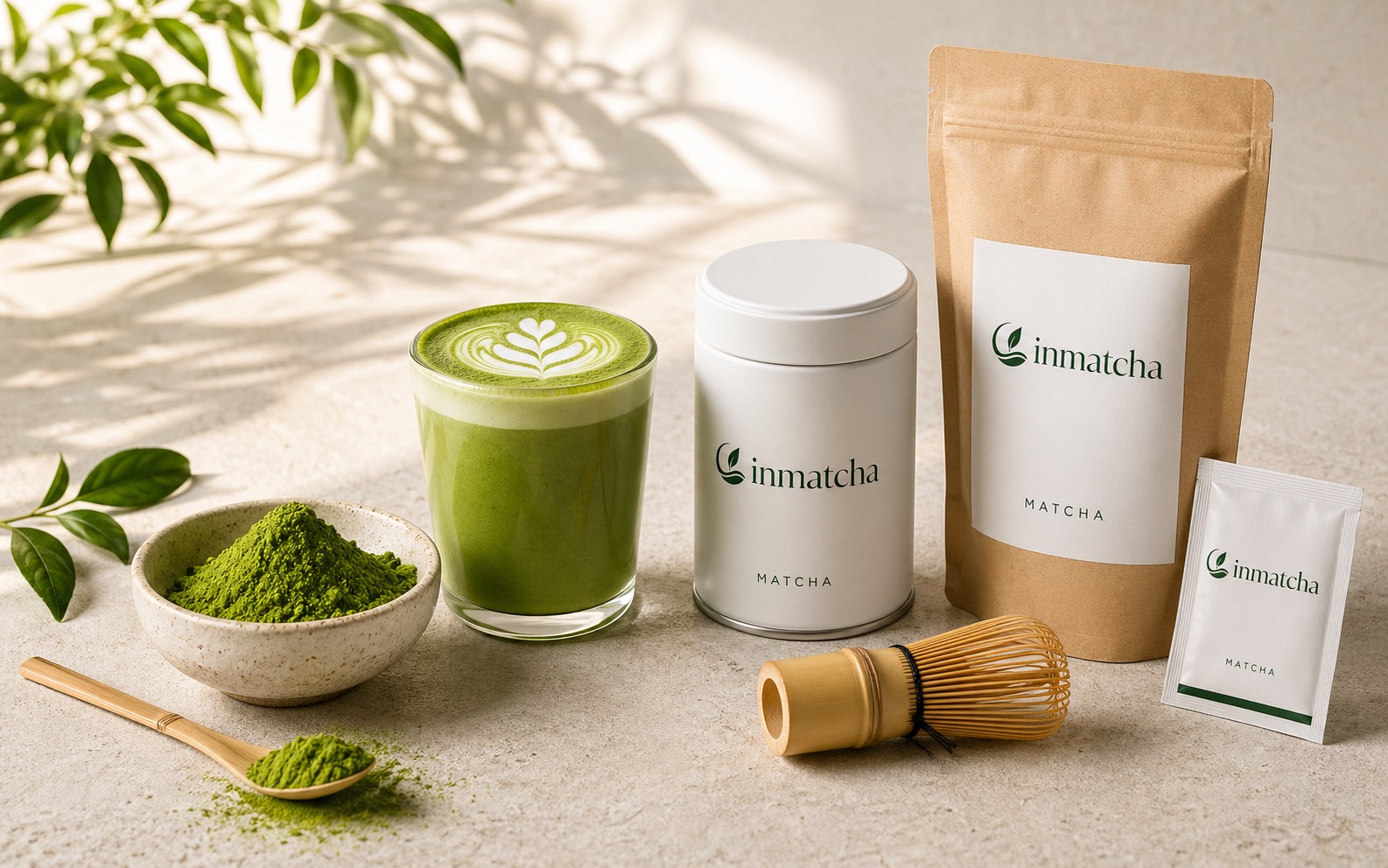
InMatcha supports this page as a buyer decision path. Buyers should confirm application, target market, estimated volume, packaging direction, cost target, and documentation requirements before sample dispatch. Industrial 1A remains a cost-controlled industrial and application grade; it is not positioned as the main premium cafe or latte-grade route.
Buyer questions
Real questions culinary buyers should answer
| Question from real use | Buyer risk | How to test or answer it |
|---|---|---|
| Will matcha color survive baking or processing? | A good dry powder may turn dull in heat or fat-based recipes | Test in the actual cake, cookie, filling, ice cream, sauce, or dessert process. |
| How strong should the flavor be? | Too weak can disappear; too bitter can overpower the recipe | Record dosage, sweetness balance, fat content, aftertaste, and final product color. |
| Is lower-cost culinary matcha acceptable? | Food margins may require a grade that still performs after processing | Compare recipe cost with visible color, flavor strength, bitterness, and consumer expectation. |
| What technical details matter for food production? | Production teams may need more than sensory approval | Review particle feel, blending behavior, moisture, packaging size, specs, and COA/testing references where available. |
Buyer decision table
What to test before commercial planning
| Buyer need | Likely direction | What to test |
|---|---|---|
| Bakery | Culinary Grade B | Color after baking, flavor strength, recipe cost |
| Dessert | Culinary Grade B | Color, sweetness balance, texture |
| Dry mix | Industrial application grade | Particle size, blending behavior, moisture |
| Sauce or filling | Culinary or application grade | Flavor release, stability, dosage |
Sample-first workflow
A focused sample test should answer performance, cost, packaging, and documentation questions before larger order discussion.
- Share the application and target market.
- Confirm grade direction and sample route.
- Test in the real recipe, menu item, or product workflow.
- Review packaging, MOQ, and documentation needs.
- Use feedback to decide the next commercial step.
Applications
Application matrix: what matters where
| Application | What decides success | What to test |
|---|---|---|
| Bakery (croissants, cookies, cakes) | Heat stability, flavor carry through fat and sugar | Color and flavor after a real bake, not in the bowl |
| Ice cream & frozen desserts | Color in cold, high-fat systems; even dispersion | Color after churn and 48 h frozen storage |
| Sauces & fillings | Clump-free dispersion, flavor at low dose | Slurry behavior, taste at 1–2% inclusion |
| Dry mixes (latte & baking mixes) | Particle flow, blend uniformity, shelf color | Color and clumping after accelerated shelf testing |
| Chocolate & confectionery | Behavior in fat systems, moisture sensitivity | Bloom, snap, and color in the finished piece |
Color science
Heat, pH, and keeping the green
Matcha’s green is chlorophyll, and chlorophyll has enemies. Three practical rules protect the color you paid for:
- Heat exposure: longer and hotter pushes green toward olive. Add matcha as late in the process as the recipe allows, and don’t pay for delicate aroma the oven will destroy anyway.
- pH: strongly alkaline systems dull the green faster. If the recipe allows, keep the matcha phase nearer neutral.
- Light and air in storage: opaque, airtight, cool storage for both powder and finished goods — a vivid bake can fade in a bright display case.
Grade selection sets the ceiling: stronger starting pigment means more green left after processing. That’s the spec our culinary line is bought against.
Production
Line behavior: dispersion and consistency
- Dry systems: pre-blend matcha with a portion of the dry ingredients before the main mix — it prevents streaking and shortens mix time.
- Liquid systems: make a small slurry first; adding powder directly to hot liquid invites clumping.
- Batch-to-batch consistency: for production, a consistent color and particle spec matters more than top-end sensory. Lock the spec in writing and require batch-referenced COAs — see the documentation center.
Costing
What culinary matcha really costs per unit
At typical 1–3% inclusion, a kilogram of dough uses 10–30 g of matcha — so even the gap between a $25/kg and a $60/kg powder is a few cents per finished unit. The decision that actually moves money is volume pricing and supply consistency, not squeezing the last dollar per kg. Indicative 2026 price bands by grade and origin: bulk matcha price guide.
FAQ
Culinary buyer questions
What is culinary matcha?
Matcha specified for recipes rather than straight drinking: robust flavor that carries through butter, sugar, and flour, dependable color after processing, and a per-kg cost that works at recipe inclusion rates.
Is culinary matcha lower quality?
It’s a different spec, not a defect. Delicate top notes don’t survive a 180°C oven — culinary grades spend the budget on color stability and flavor carry instead.
How much matcha do recipes use?
Typical inclusion is 1–3% of batch weight: roughly 10–30 g per kg of dough or base. At those rates even premium culinary pricing adds only cents per finished unit.
Does matcha color survive baking?
Partially — heat, alkaline pH, and light all push green toward olive. Choose strong starting pigment, add matcha late where possible, and store finished goods away from light.
What does bulk culinary matcha cost?
Indicatively $15–45/kg for China-grown culinary tiers in 2026, versus $45–100/kg for Japanese equivalents — see the price guide for the full bands.
Sample-first sourcing
Ready to test this sourcing path?
Share your application, market, estimated volume, packaging direction, and documentation needs so InMatcha can suggest a practical sample route.