Latte grade matcha
Latte grade matcha for hot and iced cafe menus.
A latte program needs matcha that stays visibly green in milk, tastes smooth enough for repeat purchase, and works within a practical cost per cup.
Short answer
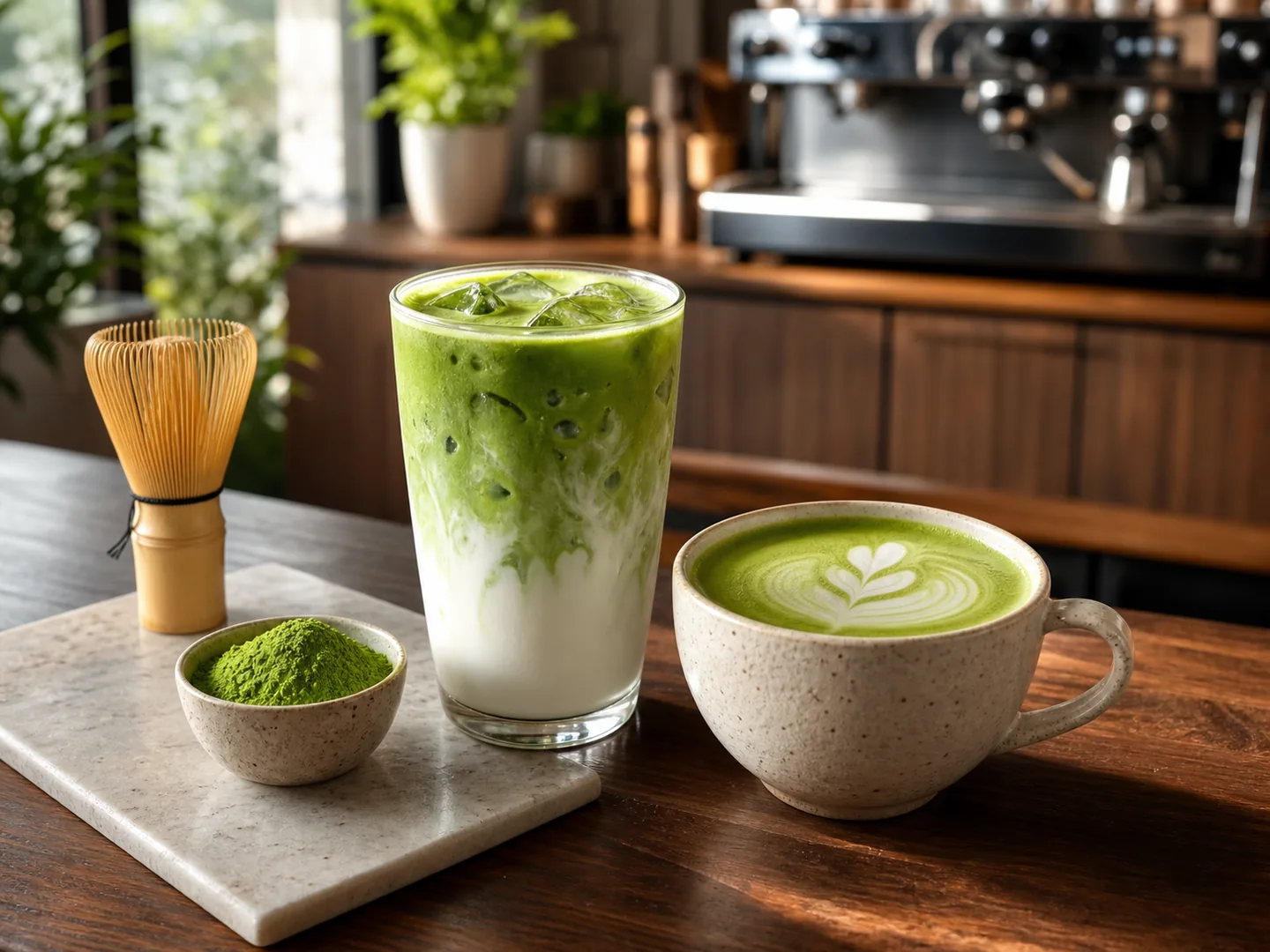
Latte matcha should be tested in milk, not judged only as dry powder.
Good dry color is useful, but cafe buyers need to check milk visibility, bitterness after sweetening, hot and iced service behavior, foam, sediment, and cost per serving.
Parameters
Latte testing parameters
Latte grade matcha should be evaluated inside the actual cafe recipe. These numbers help buyers compare samples with the same method.
1.5 g, 2 g, 3 g
Test cup strength and cost before choosing a serving standard.
Buyer check1:6 to 1:9 base to milk
Check whether matcha color remains visible after dilution.
Buyer checkHot and iced
Compare foam, bitterness, sediment, and color at both service temperatures.
Buyer checkBuyer mistakes
Common latte buyer mistakes
Cafe buyers often choose the brightest dry sample and then discover it turns bitter, weak, or expensive in service. A latte powder is not chosen in a bowl; it is chosen in the cup customers actually drink. The correct test uses the same milk, ice, water temperature, sweetener, staff method, and cup size as the menu.
Testing only dairy milk when the menu sells oat milk or other plant milk drinks.
Ignoring dosage. A cheaper sample at 4 g per cup may cost more than a stronger sample at 2 g.
Not checking iced service, where dilution and sediment often become more visible.
Buyer detail
Cafe menu approval details
Cafe menu approval should connect color, bitterness, milk performance, cost per serving, sample testing, specs, and COA route. A cafe should test hot latte, iced latte, dairy milk, oat milk, sweetness level, staff method, and holding time before asking for repeat supply. The approved route should also carry the documentation conversation forward, because multi-location cafes and hospitality buyers may need specs, COA or batch summaries, packaging details, and document scope tied to the selected sample route.
Buyer facts
Key details buyers usually want immediately.
These facts help procurement and R&D teams decide whether to request samples and what information to include.
Samples first, then a 12 kg minimum order — 48 bags of 250 g.
Retail pouch, tin, sachet, carton, and bulk formats from 250 g to 20 kg.
COA, FSSC 22000, FDA-registered facility route, organic, halal, and kosher paths where applicable.
Cafes, coffee chains, hotels, beverage trainers, and foodservice distributors.
Hot latte, iced latte, sweetened latte, oat milk, dairy milk, foam, and color after dilution.
A powder that looks bright dry can still taste bitter or disappear in milk.
Next route
Latte testing route
Use matched samples to test real menu behavior before scaling.
Related sourcing questions
Continue the buying path with related pages.
Use these pages when the current question touches grade choice, sample testing, packaging, documents, or the next commercial decision.
Cafe supplier route
For cafe and chain procurement questions.
Open pageRelatedFoodservice matcha powder
For beverage programs beyond latte.
Open pageRelatedBulk matcha price per kg
For cost per cup thinking.
Open pageRelatedCafe training kits
For whisk, sifter, and preparation tools.
Open pageRelatedSample request
For recipe-specific sample routing.
Open pageFAQ
Questions buyers ask before moving to samples.
Short answers help procurement, R&D, and brand teams prepare a clearer sample request.
Why does matcha taste bitter in latte?
Bitterness can come from grade choice, dosage, water temperature, insufficient whisking, or a powder that is not suited to milk drinks. Test in the exact latte recipe before bulk ordering.
Can InMatcha provide documents before bulk ordering?
Document availability depends on the selected grade, supplier route, certification scope, destination market, and confirmed batch. Buyers should share document needs before sampling.
Can I request multiple matcha grades for comparison?
Yes. A sample route can compare latte, beverage, culinary, retail, or documentation-led options against the real product application.
What dosage should cafes use when testing latte matcha?
Start with 1.5 g, 2 g, and 3 g per cup. Compare color, bitterness, foam, sediment, and cost per cup before selecting the menu standard.
Should latte matcha be tested in plant milk?
Yes if the menu sells plant milk. Oat, soy, and dairy can change color visibility, sweetness balance, and texture, so the real service milk should be part of the sample test.
Sample request
Build a latte sample set.
Share milk type, dosage target, menu price, market, and expected monthly volume.