Private label matcha
Private label matcha powder with packaging and kit planning.
A premium retail matcha launch needs powder, packaging, claim language, documents, MOQ, and sample logic aligned before design is locked.
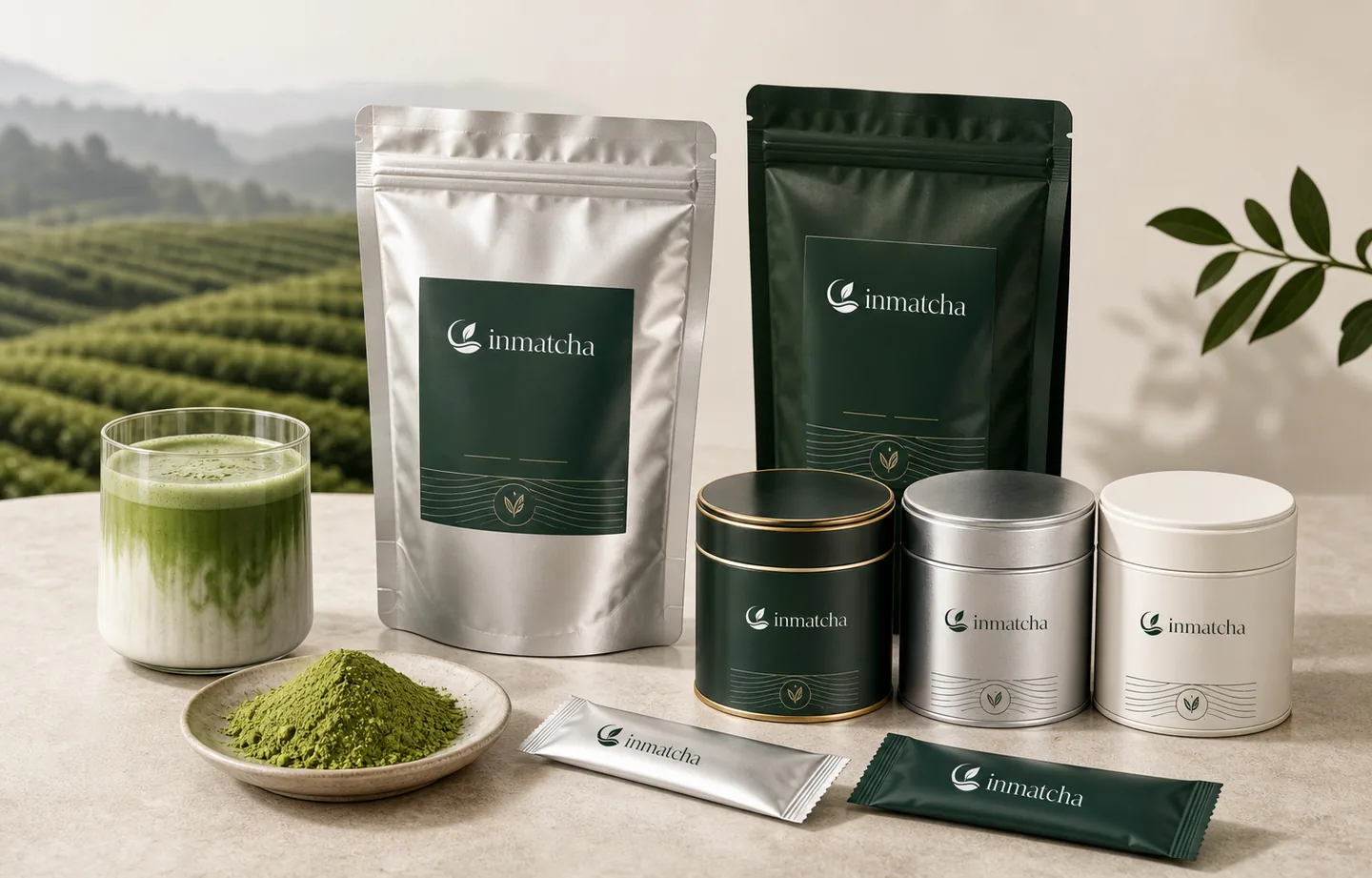
Short answer
Private label matcha is a product system, not only a label on a pouch.
InMatcha supports grade discussion, pouch and tin direction, sachet and kit options, document route review, and first-order planning for commercial buyers.
Parameters
Private label launch parameters
Private label decisions should join powder, packaging, claims, documents, and first order economics before artwork is locked.
250 g, 500 g, 1 kg
Match shelf price, shipping weight, and target customer.
Buyer check3 to 6 items
Compare powder-only, starter kit, and premium ritual kit positions.
Buyer checkBefore print
Confirm route and market boundaries before label text is final.
Buyer checkBuyer mistakes
Common private label mistakes
Private label buyers often start with mockups and packaging before the powder route is proven. That reverses the decision. The customer will judge flavor, color, preparation, and trust first; packaging should support that product truth, not hide a weak route.
Printing organic, origin, or certification language before records are confirmed by the selected route.
Choosing tins or sachets without checking MOQ, label area, and lead time.
Ignoring accessory quality in premium kits, where the whisk, bowl, and insert shape perceived value.
Buyer detail
Private label launch detail
Private label planning should connect grade positioning, packaging, color, claims, samples, specs, and COA route. Private label buyers should define the product promise before packaging: latte pouch, pure tea tin, wellness powder, sachet, refill, or ritual kit. Each route changes grade, MOQ, label area, claim boundaries, accessories, and document review. Final artwork should wait until the powder route, market requirements, and certification language are confirmed. For the first inquiry, the buyer should include target retail price, expected pack size, market, first-order range, and whether accessories such as whisk, bowl, scoop, or sifter are part of the launch.
Buyer facts
Key details buyers usually want immediately.
These facts help procurement and R&D teams decide whether to request samples and what information to include.
Samples first, then a 12 kg minimum order — 48 bags of 250 g.
Retail pouch, tin, sachet, carton, and bulk formats from 250 g to 20 kg.
COA, FSSC 22000, FDA-registered facility route, organic, halal, and kosher paths where applicable.
Foil pouches, metal tins, sachets, refills, cartons, inserts, and powder-plus-tool kits.
Positioning, sample comparison, packaging route, document check, and first commercial order.
Chasen, chawan, chashaku, sifter, cloth, guide insert, and branded carton discussion.
Next route
Private label routes
Choose the route based on channel, price point, and desired customer experience.
Related sourcing questions
Continue the buying path with related pages.
Use these pages when the current question touches grade choice, sample testing, packaging, documents, or the next commercial decision.
Private label program
For launch workflow and packaging direction.
Open pageRelatedPrivate label checklist
For pre-sampling decisions.
Open pageRelatedMatcha sets
For powder plus ritual kit components.
Open pageRelatedDocumentation center
For claim and record questions.
Open pageRelatedSample request
For project-specific routing.
Open pageFAQ
Questions buyers ask before moving to samples.
Short answers help procurement, R&D, and brand teams prepare a clearer sample request.
Can I put my logo on matcha pouches or tins?
Logo and label routes can be discussed for qualified private label projects. Final feasibility depends on format, MOQ, artwork, supplier route, and timeline.
Can InMatcha provide documents before bulk ordering?
Document availability depends on the selected grade, supplier route, certification scope, destination market, and confirmed batch. Buyers should share document needs before sampling.
Can I request multiple matcha grades for comparison?
Yes. A sample route can compare latte, beverage, culinary, retail, or documentation-led options against the real product application.
When should private label packaging design start?
Start visual direction early, but do not lock final claims, pack size, or format until powder route, MOQ, document scope, and market requirements are confirmed.
Can private label matcha include accessories?
Yes. A private label route can discuss chasen, chawan, chashaku, sifter, pouch, tin, insert, and carton options where MOQ and timeline fit.
Sample request
Plan a private label matcha route.
Send target channel, packaging format, expected volume, market, and accessory needs.